
Odgazowywanie aluminium w linii produkcyjnej: jak dobrać odpowiedni materiał na rurę grzejną
Odgazowywanie aluminium w linii produkcyjnej: jak dobrać odpowiedni materiał na rurę grzejną
RBSN, spiekany GPS Si₃N₄ lub Sialon ULTRA™ — materiał, z którego wykonana jest rura grzewcza w Twoim urządzeniu do odgazowywania w linii, ma wpływ na częstotliwość przeglądów, ryzyko zanieczyszczenia oraz opłacalność odlewni.
27 lipca 2026 r. · 15 minut czytania
W skrócie
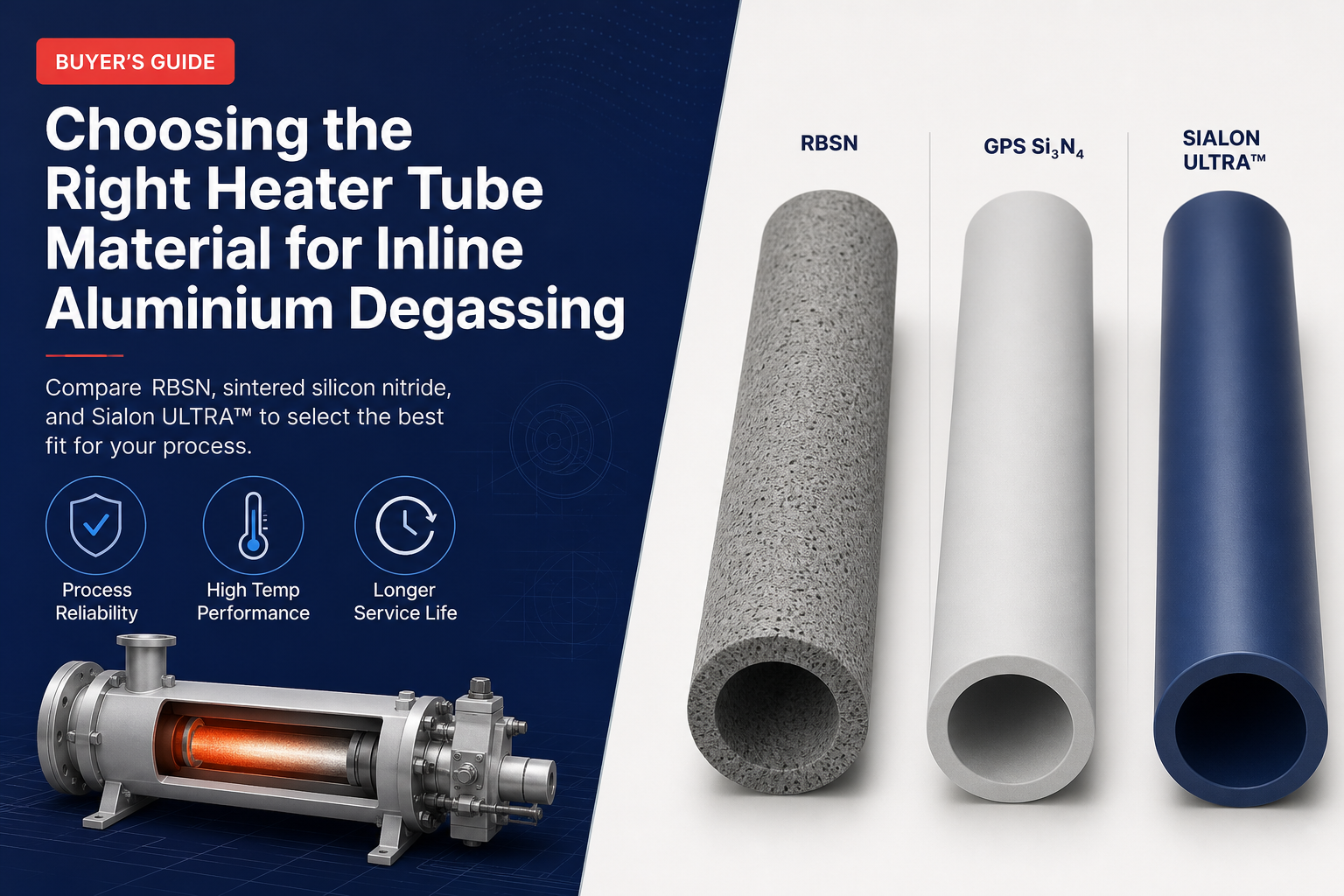
Rura grzewcza wewnątrz urządzenia do odgazowywania w linii determinuje częstotliwość konserwacji, ryzyko zanieczyszczenia, a ostatecznie – rentowność odlewni. Obecnie do wyboru są trzy warianty azotku krzemu: Si₃N₄ spajany reakcyjnie (RBSN) stanowi przystępną opcję dla początkujących; spiekany Si₃N₄ typu GPS jest standardem branżowym; natomiast Sialon ULTRA™ to najwyższej klasy rozwiązanie zaprojektowane z myślą o długiej żywotności. Wszystkie trzy są chemicznie obojętne w stosunku do stopionego aluminium. Różnią się jednak porowatością, wytrzymałością mechaniczną i trwałością eksploatacyjną. W rezultacie różnice te prowadzą do znacznie odmiennych cykli wymiany w okresie trzech lat. Niniejszy przewodnik wyjaśnia zatem kompromisy i przedstawia praktyczne ramy wyboru gatunku, gromadząc wszystkie kluczowe dane w jednym miejscu.
W odlewniach, w których już stosowane są platformy ALPUR®, SNIF®, Hertwich lub Striko Westofen, rury grzejne Sialon Ceramics ULTRA™ stanowią bezpośredni zamiennik. Ponadto firma produkuje każdą rurę na zamówienie z dokładnością do ±0,02 mm, zapewniając precyzyjne dopasowanie do geometrii danego urządzenia.
Dlaczego wybór materiału, z którego wykonana jest rura grzewcza, ma większe znaczenie, niż zdaje sobie sprawę większość odlewni
Zadanie rurki grzewczej wydaje się proste: chronić elektryczny element grzejny przed bezpośrednim kontaktem ze stopionym aluminium, jednocześnie przekazując ciepło do stopu. Należy utrzymywać temperaturę metalu na poziomie 700–730°C, co stanowi optymalną temperaturę zapewniającą wydajne odgazowanie w przypadku większości stopów odlewniczych Al-Si. Spadek poniżej tego przedziału powoduje spowolnienie odgazowania; przekroczenie go prowadzi do wzrostu rozpuszczalności wodoru – wzrost temperatury o 200°F / 111°C powoduje mniej więcej dwukrotny wzrost zawartości rozpuszczonego wodoru, co utrudnia dalszą obróbkę.
Jednak rura grzejna to nie tylko element grzewczy.
Rzeczywiście, jest to pierwsza część instalacji odgazowującej, która ulega awarii, a także główny czynnik powodujący konieczność przeprowadzania nieplanowanych przeglądów. Na przykład porowata rura RBSN pochłania wilgoć z atmosfery i może uwalniać ją w postaci wodoru do stopu – czyli właśnie tego gazu, który cały proces odgazowywania ma na celu usunąć. Podobnie rura spiekana niższej jakości, która osiąga swoją granicę odporności na szok termiczny, pęka w trakcie cyklu pracy. W rezultacie awaria rury w nieodpowiednim momencie nie tylko skraca okres między przeglądami, ale może również zakłócić proces ogrzewania.
Ostatecznie to wybór materiału wyznacza częstotliwość konserwacji całego urządzenia. To z kolei wpływa na ryzyko zanieczyszczenia i – po uwzględnieniu częstotliwości wymiany oraz związanych z tym przestojów – w znacznym stopniu determinuje rzeczywistą opłacalność procesu odgazowywania.
](https://cdn-public.eesel.ai/95ace049-b43d-4516-91a5-8cb8151b29d1/ab007f3b-dee0-45e8-839d-0212d2cea820/b006c6f2f04e4c07ba4b1ac8b1dd287d.mp4)
Trzy odmiany azotku krzemu w skrócie
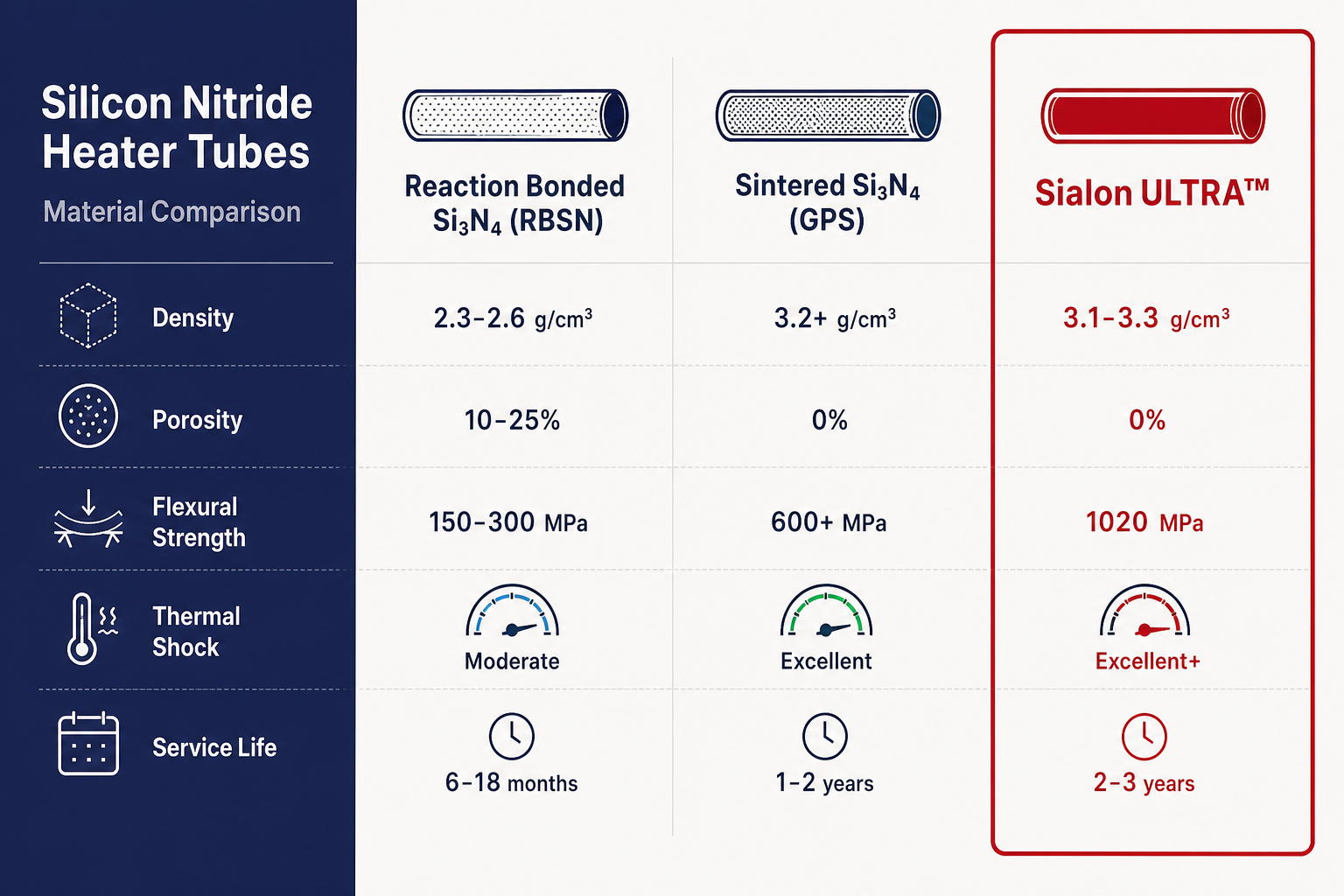
Wszystkie trzy materiały objęte tym porównaniem mają ten sam skład chemiczny – azotek krzemu (Si₃N₄) lub tlenoazotek krzemu i glinu (SiAlON) – i wszystkie są chemicznie obojętne wobec stopionego aluminium. Różnice w właściwościach wynikają ze sposobu ich wytwarzania:
| Własność | Si₃N₄ połączony metodą reakcyjną (RBSN) | Spiekany Si₃N₄ (GPS/HPS) | Sialon ULTRA™ (SiAlON) |
|---|---|---|---|
| Metoda produkcji | Azotowanie proszku krzemu | Spiekanie gazowe/pod ciśnieniem na gorąco | Spiekanie z dodatkiem Al/O |
| Gęstość nasypowa | 2,3–2,6 g/cm³ | >3,2 g/cm³ | 3,1–3,3 g/cm³ |
| Porowatość | 10–25% | 0% | 0% |
| Wytrzymałość na zginanie | 150–300 MPa | >600 MPa | Do 1 020 MPa (ULTRA-003) |
| Odporność na szok termiczny | Umiarkowane | Doskonałe (>500 °C ΔT) | Doskonałe (550–900 °C ΔT) |
| Brak zwilżania stopionego aluminium | Tak | Tak | Tak – całkowicie |
| Ryzyko ponownego przedostania się wodoru | Umiarkowana (porowatość) | Brak | Brak |
| Typowy okres eksploatacji | 6–18 miesięcy | 1–2 lata | 2–3 lata |
| Rozszerzalność cieplna | 2,5–3,0 × 10⁻⁶/°C | ~3,2 × 10⁻⁶/°C | 3,2–3,5 × 10⁻⁶/°C |
| Typowy koszt zakupu | Niżej | Średni | Wyższy koszt początkowy |
Ogólna tendencja jest taka: wszystkie trzy warianty znacznie przewyższają starsze materiały pod każdym istotnym względem. W obrębie rodziny azotków krzemu różnice sprowadzają się do gęstości, porowatości i wytrzymałości.
Azotek krzemu związany metodą reakcyjną: przystępny punkt wyjścia, rzeczywiste ograniczenia
Si₃N₄ otrzymywany metodą wiązania reakcyjnego (RBSN) powstaje w wyniku azotowania proszku krzemu bezpośrednio w podwyższonej temperaturze, bez etapu spiekania pod wysokim ciśnieniem. W rezultacie otrzymuje się ceramikę o mniejszej gęstości – zazwyczaj 2,3–2,6 g/cm³ w porównaniu z >3,2 g/cm³ w przypadku gatunków spiekanych – o porowatości resztkowej wynoszącej od 10 do 25%. Ta prostota produkcji sprawia, że RBSN jest tańszy w wytwarzaniu, a w zastosowaniach o niższym stopniu krytyczności zapewnia znaczną wydajność.
Głównym ograniczeniem jest porowatość. Porowaty korpus rury grzejnej wchłania wilgoć atmosferyczną podczas przechowywania, transportu oraz wszelkich czynności konserwacyjnych, kiedy rura jest wystawiona na działanie powietrza. Podczas eksploatacji wilgoć ta może odparować w środowisku stopu. Para wodna w kontakcie ze stopionym aluminium rozkłada się na wodór i tlenek glinu – wodór przedostaje się bezpośrednio do stopu, który próbuje się odgazować, a tlenek glinu staje się wtrąceniem. Rura RBSN w złym stanie technicznym może aktywnie utrudniać proces odgazowywania.
Wytrzymałość mechaniczna ogranicza trwałość podczas obsługi. Przy wytrzymałości na zginanie wynoszącej 150–300 MPa rury grzewcze RBSN są podatne na uszkodzenia podczas montażu, demontażu oraz awaryjnego wyciągania na zimno. W odlewniach, w których często przeprowadza się prace konserwacyjne – zwłaszcza na liniach o wysokiej wydajności, gdzie wymiana wirników jest rutynową czynnością – rury RBSN będą bardziej podatne na pękanie pod wpływem obciążeń mechanicznych związanych z codzienną eksploatacją.
Okres eksploatacji jest zmienny i zależy od warunków otoczenia. Filtr RBSN może działać przez 6–18 miesięcy, w zależności od częstotliwości cykli pracy, temperatury topnienia oraz warunków użytkowania. W przypadku urządzeń pracujących w trybie ciągłym w linii produkcyjnej realistycznym jest dolna granica tego przedziału, co oznacza co najmniej jedną wymianę na cykl produkcyjny.
Nasza opinia: System RBSN sprawdza się w przypadku operacji wsadowych o mniejszej częstotliwości cykli, mniejszych wymaganiach mechanicznych oraz przy odpowiednim przechowywaniu rur. W przypadku ciągłego odgazowywania w linii przy stałych wielkościach produkcji ryzyko związane z porowatością oraz ograniczenia wytrzymałościowe sprawiają, że jest to rozwiązanie kompromisowe, w którym marginalne oszczędności kosztów rzadko rekompensują ryzyko związane z konserwacją.
Spiekany azotek krzemu: standard branżowy
Azotek krzemu spiekany pod ciśnieniem gazu (GPS) lub spiekany na gorąco pod ciśnieniem (HPS) jest dominującym materiałem stosowanym na całym świecie do produkcji rur grzewczych w instalacjach do odgazowywania w linii. Proces spiekania w kontrolowanej atmosferze azotu w temperaturze 1 750–1 900 °C pozwala uzyskać w pełni gęstą ceramikę o zawartości Si₃N₄ przekraczającej 92% i zerowej porowatości. Jest to materiał, który wyeliminował problemy związane z porowatością i wilgocią charakterystyczne dla RBSN.
Brak porowatości całkowicie zmienia sytuację w zakresie zanieczyszczeń.
Azotek krzemu wykazuje doskonałe właściwości niezwilżające w stosunku do stopionego aluminium i pozostaje chemicznie obojętny. Ponieważ nie posiada otwartych kanałów porowatych, nie ma drogi do wchłaniania wilgoci ani źródła zanieczyszczeń z rurki do stopu. Rurka grzewcza GPS Si3N4 jest elementem pasywnym – przenosi ciepło, wytrzymuje cykle termiczne i nie wpływa w żaden sposób na poziom wodoru ani wtrąceń.
Odporność na szok termiczny jest naprawdę znakomita.
Niski współczynnik rozszerzalności cieplnej azotku krzemu, wynoszący około 3,2 × 10⁻⁶/°C w zakresie temperatur od temperatury pokojowej do 1 000 °C, pozwala operatorom na wkładanie i wyjmowanie rurki ze stopu o temperaturze 700–800 °C bez ryzyka jej pęknięcia. To właśnie ta właściwość sprawiła, że spiekany Si₃N₄ stał się standardem branżowym – wytrzymuje on warunki eksploatacyjne, które były główną przyczyną awarii wcześniejszych materiałów.
Okres eksploatacji wynoszący 1–2 lata stanowi standard branżowy.
Rury grzewcze GPS Si3N4 charakteryzują się żywotnością przekraczającą jeden rok dzięki połączeniu odporności na korozję i właściwości nieprzywierających. W większości odlewni o umiarkowanej wielkości produkcji coroczna wymiana rur stanowi zaplanowane i przewidywalne działanie konserwacyjne.
Ograniczeniem jest standaryzacja.
Chociaż rurki grzewcze GPS Si₃N₄ są dostępne u wielu producentów o zasadniczo podobnych parametrach technicznych, elementy te stały się w zasadzie produktem masowym na rynku ceramiki technicznej. Zazwyczaj standardowy materiał charakteryzuje się żywotnością wynoszącą 1–2 lata; jednak ten produkt klasy masowej nie daje zbyt wielu możliwości optymalizacji wydajności w przypadku kompozycji stopów o właściwościach ściernych, ekstremalnych częstotliwości cykli pracy lub rygorystycznych wymagań dotyczących efektywności energetycznej.
Nasza opinia:
Spiekany Si3N4 typu GPS stanowi odpowiednią podstawę dla większości zastosowań w odlewniach. Eliminuje on ryzyko porowatości i zanieczyszczeń charakterystyczne dla RBSN, zapewnia przewidywalną żywotność wynoszącą 1–2 lata oraz jest powszechnie dostępny. Pytanie brzmi, czy „standard branżowy” jest właściwą specyfikacją dla konkretnego urządzenia – czy też warunki eksploatacyjne uzasadniają zastosowanie gatunku o wyższej klasie.
Sialon ULTRA™: specjalnie zaprojektowany z myślą o warunkach, w których standardowe rurki zawodzą
### Dlaczego ULTRA™ przewyższa standardowy Si₃N₄
Producenci wytwarzają tlenoazotek krzemu i glinu (sialon) poprzez wprowadzenie glinu i tlenu do sieci krystalicznej azotku krzemu w ściśle kontrolowanych proporcjach. Proces ten pozwala uzyskać materiał o specyficznych właściwościach, a nie tylko zwykłą odmianę Si₃N₄. Inżynierowie projektują jego mikrostrukturę tak, aby przewyższała ona właściwościami standardowego spiekanego Si₃N₄ stosowanego w pracujących w trybie ciągłym urządzeniach do odgazowywania w linii produkcyjnej.
### Wyższa wytrzymałość mechaniczna
Najważniejszą różnicą jest wytrzymałość. ULTRA-003 osiąga wytrzymałość na zginanie wynoszącą 1 020 MPa — czyli o około 70% wyższą niż standardowy GPS Si₃N₄ (>600 MPa). Przy gęstości ceramicznej wartość 1 020 MPa jest porównywalna z wieloma stopami inżynieryjnymi. W rezultacie rura wytrzymuje częste wyciąganie w celu konserwacji bez pękania oraz jest odporna na erozję mechaniczną spowodowaną stopami zawierającymi wtrącenia, które stopniowo zużywają ceramiki o niższej wytrzymałości.
### Dłuższa żywotność
Żywotność przewyższa standardową wartość odniesienia dla Si₃N₄ o co najmniej 30%. Klienci korzystający z produktów Sialon Ceramics ULTRA™ rutynowo osiągają 2–3 lata ciągłej pracy — czyli o około 30% dłużej niż w przypadku standardowych rur grzewczych z azotku krzemu. Dzięki temu operatorzy ograniczają planowane przestoje, nakłady pracy oraz koszty wymiany w całym okresie eksploatacji urządzeń.
### Wyjątkowa odporność na szok termiczny
W przypadku materiału ULTRA-004 odporność na szok termiczny sięga ΔT wynoszącego 900°C. Standardowy materiał GPS Si₃N₄ wytrzymuje szok termiczny powyżej 500°C. Natomiast materiał ULTRA-004 wytrzymuje różnicę temperatur (ΔT) wynoszącą 900°C, co pozwala operatorom na umieszczenie go bezpośrednio z temperatury otoczenia w stopie o temperaturze 700°C bez konieczności stosowania protokołu stopniowego podgrzewania. W rezultacie zakłady przeprowadzające awaryjne wyciąganie na zimno i szybkie ponowne uruchamianie mogą wyeliminować całą kategorię awarii spowodowanych czynnikami termicznymi.
### Precyzyjna produkcja na zamówienie
Specjalnie zaprojektowana geometria eliminuje konieczność kompromisów w zakresie dopasowania. Firma Sialon Ceramics produkuje każdą rurę ULTRA™ na zamówienie z tolerancją ±0,02 mm. Standardowe rury z Si₃N₄ są dostępne w typowych rozmiarach, natomiast firma wytwarza każdą rurę ULTRA™ zgodnie z wymaganymi parametrami średnicy zewnętrznej i wewnętrznej, długości, geometrii kołnierza oraz konfiguracji montażowej. Dzięki temu rura pasuje idealnie bez konieczności stosowania podkładek wyrównujących, poprawek ani narażania na naprężenia mechaniczne wywołane drganiami.
### Brak porowatości i stabilność chemiczna
Zero porowatości i całkowita niezwilżalność to cechy standardowe dla wszystkich gatunków ULTRA™. Podobnie jak GPS Si₃N₄, wszystkie gatunki ULTRA™ charakteryzują się pełną gęstością, zerową porowatością, zerową absorpcją wilgoci oraz brakiem dróg zanieczyszczenia. Ponadto sialon pozostaje niereaktywny w stosunku do stopionego aluminium podczas długotrwałej eksploatacji i objęty jest 12-miesięczną gwarancją na odporność na oddziaływanie chemiczne, co odzwierciedla jego sprawdzoną długotrwałą żywotność.
Pełny obraz sytuacji: najważniejsze wskaźniki w skrócie
Ponadto, poniższa infografika zawiera kompletny zestaw danych w jednym miejscu — przedstawia porównanie poszczególnych materiałów pod kątem wszystkich istotnych wskaźników oraz szczegółowe specyfikacje techniczne wszystkich czterech gatunków Sialon ULTRA™ (od ULTRA-001 do ULTRA-004), wytyczne dotyczące kompatybilności z głównymi platformami odlewniczymi, oraz kluczowe dane dotyczące wydajności.
Pełna interaktywna infografika: Odgazowywanie aluminium w linii produkcyjnej – rurki grzewcze Sialon ULTRA™
Cztery gatunki ULTRA™: który z nich najlepiej pasuje do Twojego procesu?
Asortyment ULTRA™ firmy Sialon Ceramics obejmuje ponad 20 gatunków, a nie tylko jedną specyfikację. Jednak cztery podstawowe składy pokrywają większość zastosowań w odlewniach. Dlatego ostateczny wybór gatunku zależy od ograniczeń eksploatacyjnych, które mają największe znaczenie w konkretnym zakładzie.
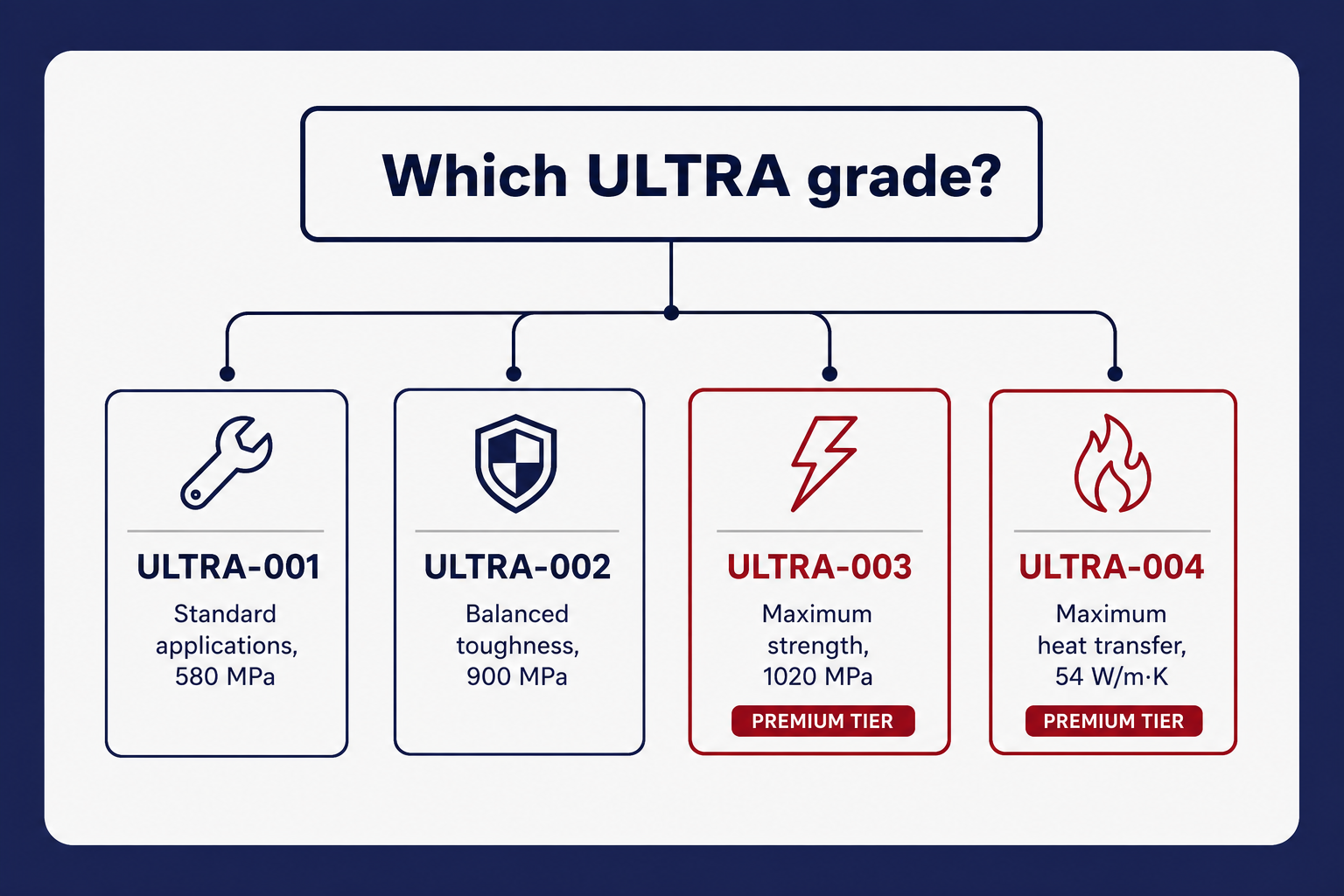
| Ocena | Wytrzymałość na zginanie | Odporność na pękanie | Szok termiczny ΔT | Przewodność cieplna | Najlepiej nadaje się do |
|---|---|---|---|---|---|
| ULTRA-001 | 580 MPa | 4–5 MPa·m¹/² | 550 °C | 25 W/m·K | Standardowe obciążenie, niższa częstotliwość przełączania |
| ULTRA-002 | 900 MPa | 6–7 MPa·m¹/² | 800 °C | 23 W/m·K | Wysoka odporność na uderzenia, częste cykle pracy |
| ULTRA-003 (MAKSYMALNA WYTRZYMAŁOŚĆ) | 1 020 MPa | 7 MPa·m¹/² | 800 °C | 27 W/m·K | Maksymalna wytrzymałość mechaniczna, stopy ścierne |
| ULTRA-004 (MAKSYMALNE OGRZEWANIE) | 790 MPa | 6–7 MPa·m¹/² | 900 °C | 54 W/m·K | Najlepszy transfer ciepła, energooszczędne ogrzewanie |
Wszystkie gatunki: gęstość nasypowa 3,1–3,3 g/cm³ · wchłanianie wody 0% · moduł Younga 270–300 GPa
ULTRA-001:
Jest to klasa podstawowa, przewyższająca standardowy Si₃N₄ stosowany w urządzeniach GPS. W zastosowaniach o standardowym obciążeniu i umiarkowanej liczbie cykli termicznych zapewnia żywotność charakterystyczną dla sialonu, oferując jednocześnie możliwość produkcji elementów o niestandardowej geometrii, co stanowi cechę charakterystyczną serii ULTRA™.
ULTRA-002:
To właśnie w tym zakresie mieści się większość procesów odlewania ciągłego. Zwiększenie wytrzymałości na zginanie do 900 MPa oraz odporności na pękanie do 6–7 MPa·m¹/² oznacza, że rura wytrzymuje rutynowe obciążenia mechaniczne związane z częstym dostępem konserwacyjnym, wymianą wirników oraz awaryjnym wyciąganiem bez pękania.
ULTRA-003:
Jest to idealny wybór do pracy w warunkach, w których występuje ścieranie w stanie stopionym. Na przykład sprawdza się dobrze w procesach przetwarzania złomu z recyklingu o dużej zawartości wtrąceń lub stopów aluminium i krzemu zawierających twarde cząstki krzemu. Nadaje się również do zastosowań, w których dotychczas większość strat rur wynikała z uszkodzeń mechanicznych. Dzięki wytrzymałości na zginanie wynoszącej 1 020 MPa ten gatunek skutecznie obala pogląd, że elementy ceramiczne są z natury kruche.
ULTRA-004:
Charakteryzuje się pewnym obniżeniem wytrzymałości na zginanie (790 MPa) na rzecz przewodności cieplnej wynoszącej 54 W/(m·K) – najwyższej w serii ULTRA™ – oraz odporności na szok termiczny do 900°C, która obejmuje wszystkie realistyczne scenariusze zastosowania. Standardowy Si3N4 firmy GPS zapewnia współczynnik przewodności cieplnej na poziomie 16–22 W/(m·K); wartość 54 W/(m·K) w przypadku ULTRA-004 jest ponad dwukrotnie wyższa, co przekłada się bezpośrednio na większą ilość ciepła przekazywana do stopu na jednostkę energii elementu grzejnego. W przypadku operacji, w których istotne są koszty energii, lub urządzeń, w których element grzejny pracuje z pełną wydajnością, ULTRA-004 zmienia równanie wydajności.
Precyzja wymiarowa jest niezależna od klasy materiału. Każda rura z serii ULTRA™ jest produkowana na zamówienie z tolerancją ±0,02 mm, zgodnie z określonymi wymaganiami dotyczącymi średnicy zewnętrznej i wewnętrznej, długości, geometrii kołnierza oraz konfiguracji montażowej.
W jakich platformach odgazowujących stosuje się sialon?
Rury grzewcze z sialonu są stosowane we wszystkich głównych instalacjach do odgazowywania w linii:
- Seria ALPUR® TS (PAE Technologies) – TS15, TS35, TS55, TS75, TS90 oraz seria G3 cc. Urządzenia ALPUR wykorzystują zintegrowaną, trwałą osłonę grzejną z sialonu, zaprojektowaną specjalnie w celu utrzymania temperatury stopu podczas obróbki. System ogrzewania in situ w urządzeniach ALPUR został zaprojektowany w oparciu o osłonę z sialonu – nie jest to modyfikacja wprowadzona po zakupie.
- SNIF® (Pyrotek) – wiodąca platforma dysz wirujących. Systemy SNIF wykorzystują azotek krzemu w większości konfiguracji, zapewniając spełnienie rygorystycznych wymagań dotyczących wodoru.
- Hertwich – linie do odlewania prętów drutowych i płyt walcowanych.
- Striko Westofen – systemy dozowania i transportu stosowane w odlewnictwie ciśnieniowym i odlewnictwie tradycyjnym.
- Ultradźwiękowe systemy odgazowywania – rurki sonotrodowe z sialonu do ultradźwiękowego usuwania wodoru, w których wymagania dotyczące właściwości chemicznych i termicznych są analogiczne do tych stawianych w przypadku odgazowywania rotacyjnego.
W praktyce oznacza to, że jeśli korzystasz z któregokolwiek z tych systemów, nie są wymagane żadne prace integracyjne. Rurka jest elementem eksploatacyjnym; zamiennik ULTRA™ jest produkowany zgodnie z tą samą geometrią, co w specyfikacji producenta oryginalnego wyposażenia (OEM).
](https://cdn-public.eesel.ai/95ace049-b43d-4516-91a5-8cb8151b29d1/ab007f3b-dee0-45e8-839d-0212d2cea820/c4f70baf18924af6923175821af8d69e.mp4)
Obliczanie całkowitego kosztu posiadania (TCO)
Porównania cen zakupu różnych wariantów azotku krzemu są mylące, jeśli nie uwzględni się częstotliwości wymiany. Oto jak wygląda obliczenie w przypadku pracującej w trybie ciągłym jednostki odgazowującej typu inline:
| RBSN | Spiekany Si3N4 do GPS | Sialon ULTRA™ | |
|---|---|---|---|
| Typowy okres eksploatacji | 6–18 miesięcy | 12–24 miesięcy | 24–36 miesięcy |
| Wymiany co 3 lata | 2–6 | 1–3 | 1–2 |
| Każda wymiana: planowana przerwa w pracy | 4–8 godzin | 4–8 godzin | 4–8 godzin |
| Łączny czas przestoju w ciągu 3 lat | 8–48 godzin | 4–24 godz. | 4–16 godzin |
| Ryzyko zanieczyszczenia wynikające z porowatości | Umiarkowane | Brak | Brak |
| Ryzyko ponownego przedostania się wodoru | Umiarkowane | Brak | Brak |
| Geometria niestandardowa | Standardowe rozmiary | Standardowe rozmiary | ±0,02 mm zgodnie ze specyfikacją |
Kolumna „Przestoje” pokazuje rzeczywistą sytuację. Rura RBSN zazwyczaj ulega awarii dwukrotnie w ciągu trzech lat, a każda wymiana wymaga 8-godzinnego przestoju. W rezultacie operatorzy tracą 16 godzin planowanych przestojów, w porównaniu z zaledwie 4–8 godzinami w przypadku pojedynczej wymiany rury ULTRA™. Co więcej, porównanie to nie uwzględnia nieplanowanych awarii rur RBSN spowodowanych skokami stężenia wodoru wywołanymi wilgocią. W przypadku odlewni pracującej na trzy zmiany 12 dodatkowych godzin utraconej produkcji oznacza znacznie więcej niż koszt wymiany rury — oznacza to znaczną stratę produkcyjną.
Firma Sialon Ceramics udziela na produkty z serii ULTRA™ 12-miesięcznej gwarancji na odporność na działanie substancji chemicznych – co w praktyce oznacza, że cena uwzględnia wieloletni rzeczywisty okres użytkowania.
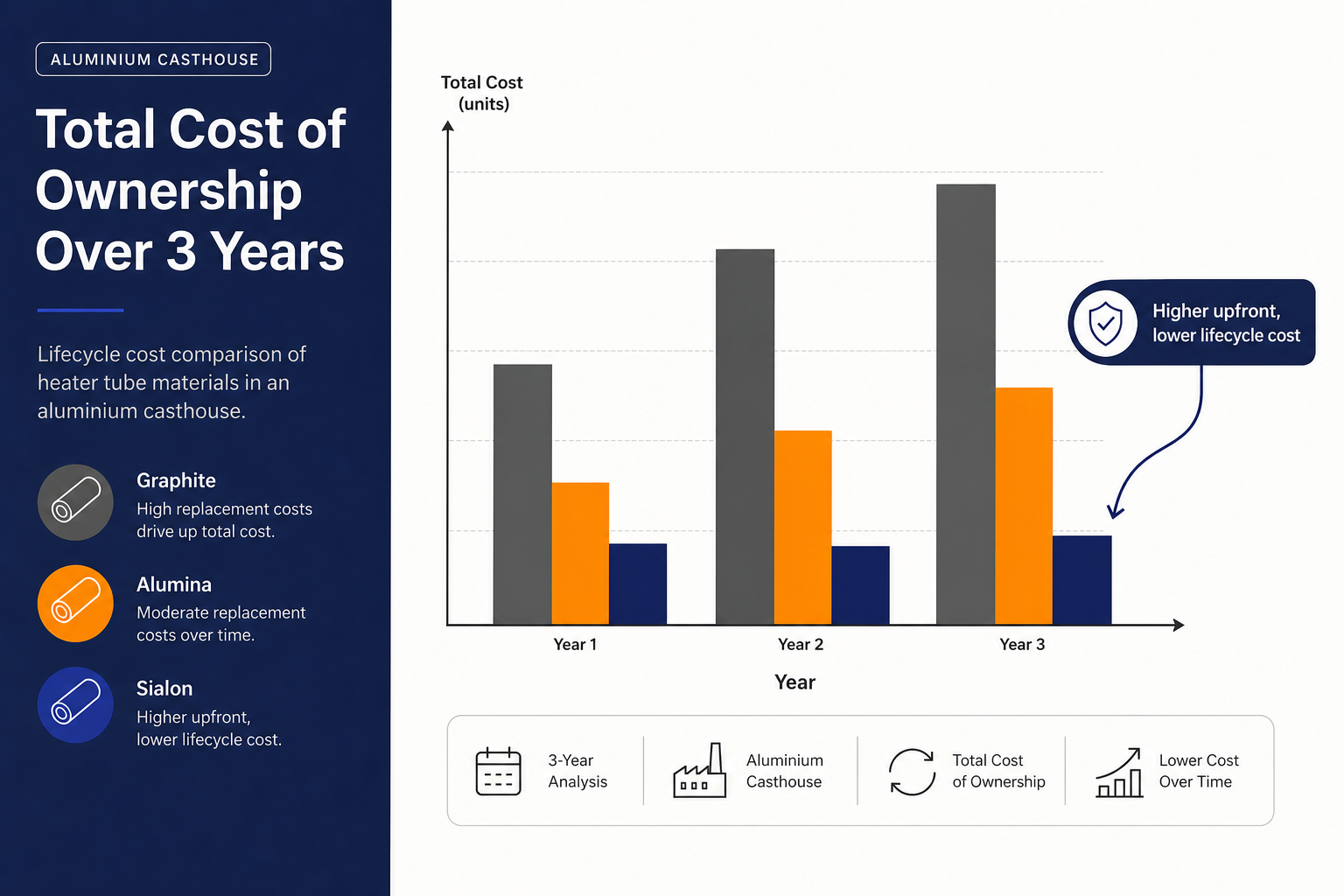
Warto zapamiętać jedną liczbę: klienci korzystający z rozwiązań ULTRA™ rutynowo osiągają 2–3 lata nieprzerwanej pracy – o 30% dłużej niż w przypadku standardowych rur grzewczych z azotku krzemu. Te 30% przekłada się bezpośrednio na mniejszą liczbę przestojów w ciągu trzech lat, co sprawia, że pod względem ekonomicznym ten materiał najwyższej jakości zdecydowanie wygrywa.
Jak dobrać odpowiednią rurkę
Gdy już zdecydujesz się na Sialon ULTRA™, proces doboru parametrów technicznych jest prosty. Firma Sialon Ceramics potrzebuje:
- Marka i model urządzenia (ALPUR TS35, SNIF HD-200 itp.) – w celu potwierdzenia standardowej geometrii oraz wszelkich znanych kwestii związanych z dopasowaniem
- Wymiary wewnętrzne – średnica zewnętrzna (OD), średnica wewnętrzna (ID) oraz długość robocza (lub numer katalogowy producenta, jeśli jest dostępny)
- Geometria kołnierza i mocowania – w przypadku rozwiązań niestandardowych
- Temperatura robocza – temperatura topnienia i typowe warunki podgrzewania wstępnego
- Rodzaj stopu – ma znaczenie w przypadku stopów o wysokiej zawartości krzemu lub cynku, które wpływają na właściwości termiczne
- Częstotliwość cyklu – jak często rurka jest wkładana i wyjmowana podczas jednej zmiany oraz czy zdarzają się awaryjne wyciągania na zimno
Na podstawie tych informacji firma Sialon Ceramics może potwierdzić odpowiedni gatunek materiału ULTRA™ i przedstawić wycenę wraz z wymiarami. Każda rura jest produkowana na zamówienie; terminy realizacji różnią się w zależności od gatunku materiału i konfiguracji.
Wypróbuj ceramikę sialonową
Od 1986 roku firma Sialon Ceramics ApS zajmuje się produkcją zaawansowanej ceramiki sialonowej przeznaczonej do przetwarzania stopionych metali nieżelaznych. Przez ponad cztery dekady firma nieustannie udoskonalała skład i geometrię rur pod kątem warunków eksploatacyjnych opisanych w niniejszym przewodniku. W rezultacie asortyment rur grzejnych ULTRA™ obejmuje ponad 20 gatunków, produkcję na zamówienie z dokładnością do ±0,02 mm, 12-miesięczną gwarancję na odporność chemiczną oraz potwierdzoną kompatybilność ze wszystkimi głównymi platformami do odgazowywania w linii produkcyjnej.
Dla odlewni korzystających z rur grzewczych RBSN lub standardowych spiekanych rur grzewczych z Si3N4, które chcą wydłużyć okresy między przeglądami, seria ULTRA™ zapewnia o 30% dłuższą żywotność w porównaniu z typowymi rurami GPS z Si3N4 – przy niestandardowej geometrii, która eliminuje konieczność kompromisów w zakresie dopasowania. Zapoznaj się z pełną ofertą produktów lub skontaktuj się z firmą Sialon Ceramics, podając informacje o obecnie używanym urządzeniu i jego wymiarach, aby otrzymać indywidualną ofertę.


 ZDialer Call